Experience the thrill
of the sky
New-generation gyrocopters, professionally designed and built, are inherently safer than fixed-wing aircraft and helicopters of similar size. Why? Because a gyrocopter can descend vertically under full control and land in a few meters of space, without the complexity and cost of a helicopter.
So a new-generation gyro always provides more options in case of emergency than a fixed-wing and is less likely to experience a technical failure than a helicopter.
The safest gyrocopters
Argon GTL and Argon Classic
The gyrocopter is universally recognized as the safest aircraft, however, even within this type of aircraft there are differences. ARGON is among the safest Gyrocopters in the world and this is due to its exceptional design and construction characteristics. To better understand this level of safety, it is necessary to focus on some concepts such as FRAME, DESIGN, SEAT, COCKPIT, MAST, UNDERCARRIAGE, HABITABILITY, WHEELBASE, GROUND HEIGHT, VISIBILITY, ENGINE COMPARTMENT and much more. Every single detail present on this splendid aircraft is designed to satisfy the highest requirements of quality, safety and performance. Every single part, bolt or element that make up ARGON is built according to aeronautical logics usually reserved for higher level aircraft.
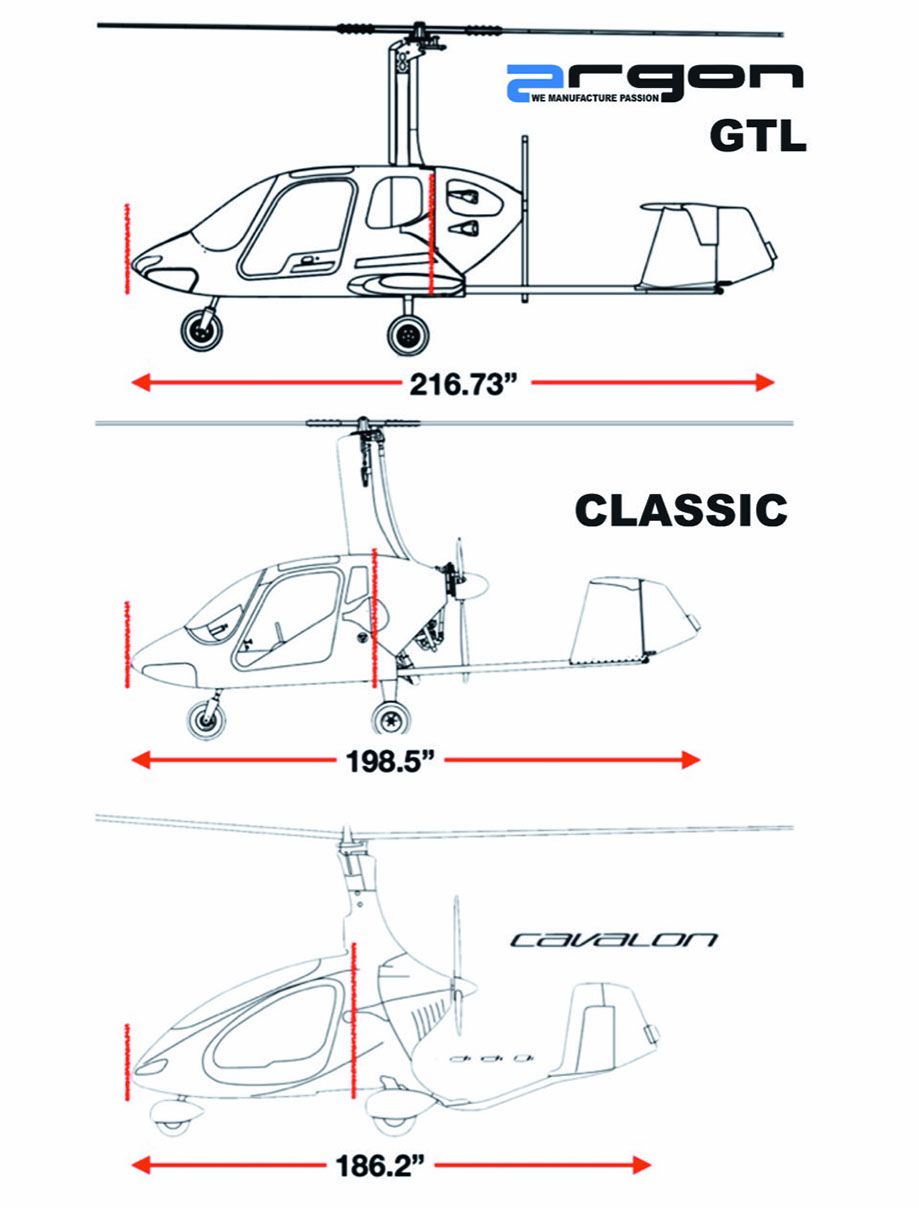
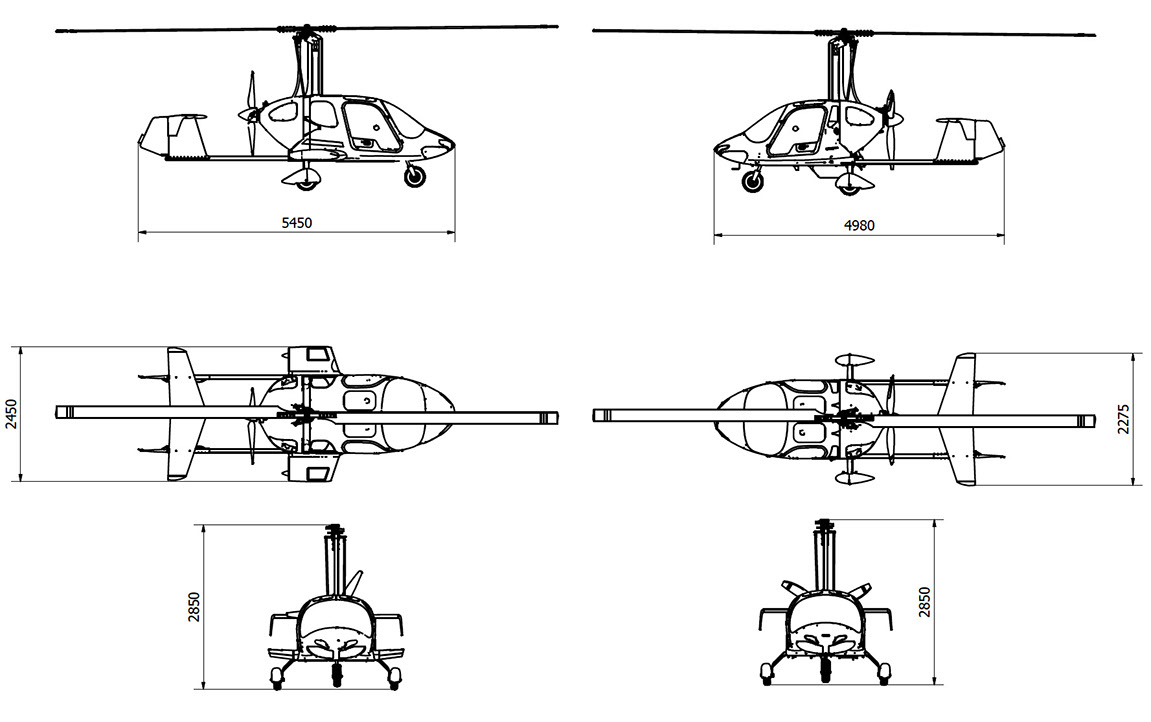
The ARGON Gyrocopter is divided into 2 main versions which are GTL and CLASSIC. here are then further versions, derivations and setups that allow you to customize the aircraft according to your needs. One of the differences that are evident at a glance between ARGON GTL and CLASSIC is the length of the aircraft. GTL is longer and is designed as a true Grand Turismo. The CLASSIC is more compact but still larger and more habitable than the competition.
Click on the button below to configure your aircraft on the official website.


CHASSIS
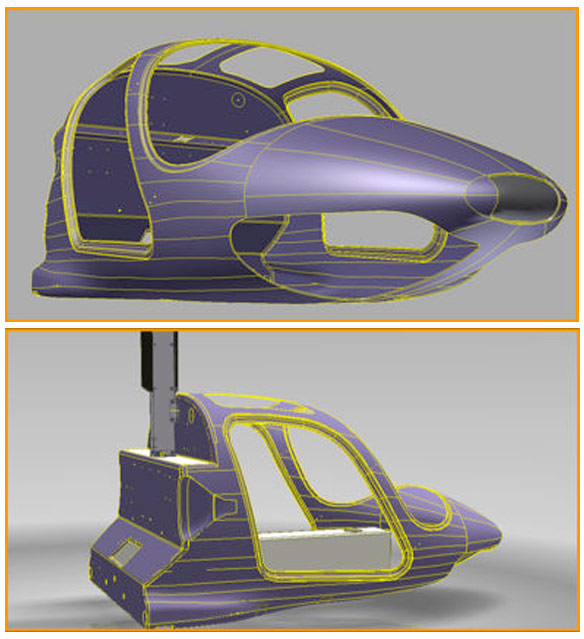
Most gyroplanes are built around a metal chassis, on which everything else is mounted, much like cars until recent years. The ARGON is different. Using the latest carbon fiber technology, the ARGON’s cabin is an engineering masterpiece. It is built around a lightweight but extremely strong monocoque protective shell, like a Formula One car. This shell provides both a crushproof protective casing for the crew and allows all other components to be mounted directly onto it, without the weight of an additional chassis or structural frame.
This provides a huge degree of safety for the crew in the event of any type of accident, because the cabin is able to withstand loads that are many times greater than the acceleration of gravity. The monocoque fuselage construction means that forces are transmitted through the fuselage rather than through the rods and tubes of the frame. ARGON is one of the few gyrocopters in the world that uses monocoque construction and is now available in carbon fiber, offering unprecedented strength and reduced weight for safety and performance.
DESIGN
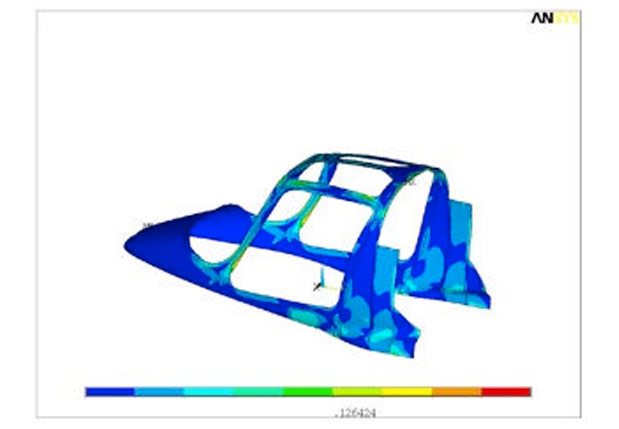
In the design process, sketches and drawings are transferred to CAD (Computer Aided Design) software, which then allows precise rendering from any angle and computational performance tests to verify the ergonomics of the machine and make rapid and cost-effective improvements, even before a prototype is built. The ARGON cabin is also equipped with controlled deformation zones, just like a modern car. The most important is the front of the cabin, which progressively absorbs energy in the event of a collision to protect the crew. Another important deformation zone is the bulkhead wall that separates the cockpit from the engine compartment.
It is a carefully reinforced structure with composite profiles. The ARGON cabin was designed with large pilots in mind, allowing even tall and wide people to feel comfortable. As a result, the ARGON offers better safety, cabin volume and comfort than any other gyroplane in its class.
Ergonomics and ease of use, combined with ultra-modern technical solutions, are at the heart of the ARGON project. At the same time, the ARGON project has a great respect for nature. Over millions of years, starting with the dinosaurs and before, nature has developed very effective ways to provide strength and agility at the lowest weight and cost. The ARGON borrows this concept from nature through biologically inspired features such as the reinforcing “ribs” in the cabin and the use of “honeycomb” materials.
THE SEAT
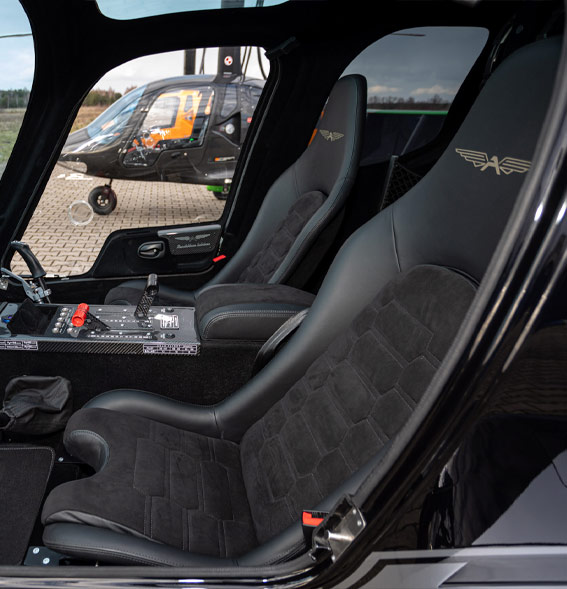
One example is the seat. Made of carbon composite and foam-filled Kevlar, this design can save our spine in a crash. Similarly, just as a blade of grass or a young, flexible sapling might survive a strong storm, while an old, strong tree might fracture and fall, nature teaches us how to provide flexibility to structures that yield, rather than break, under load.
But the real test is when theory meets practice, starting with the strength tests that are part of our rigorous certification process. ARGON is tested by the manufacturer together with the Aviation Institute of the Technical University of Warsaw. A complete study of the strength of the cabin and associated components was successfully conducted. This not only confirmed the expected strength, but, to everyone’s surprise and delight, it exceeded predictions.
In conclusion, the Argon cabin is the result of exploring cutting-edge technologies through hundreds of hours invested in analysis, testing and proof of concept in practice, over 15 years of research and development. Looking at the finished project you can perhaps now appreciate that virtually nothing has been left to chance. Every single part is the result of many hours invested in the design to achieve maximum safety, comfort and performance at the most efficient cost.
The Mast is a critical part of the structure. During the design process, engineers must reconcile seemingly contradictory requirements, providing strength without sacrificing flexibility, firmly supporting the cabin with the lift of the rotors, while allowing the rotor blades to rotate freely and be angled in pitch and roll. The mast must be very strong, because the entire structure of the Gyrocopter hangs from it, and at the same time there must be a safety zone to avoid serious injuries in the event of an unexpected collision of the rotor with an obstacle.
Using key design criteria and structural stress tests, Manufaktura Lotnicza developed a profile that reconciles these seemingly contradictory tasks. The ARGON design can withstand overload stresses on the strut that are several times the force of gravity. In the event of a serious crash, the strut will break away, separating the spinning rotor from the cabin and preventing injury to the crew.
The chassis is a simple design, directly connecting the wheels and cabin, seemingly nothing special. But in every great design, the most elegant solutions often appear simple! In fact, it is the result of numerous calculations, endurance tests and prioritization of objectives to achieve the best active and passive performance, providing uniform shock absorption on rough terrain. At the same time, the chassis provides great resistance in the event of a fall or heavy landing.
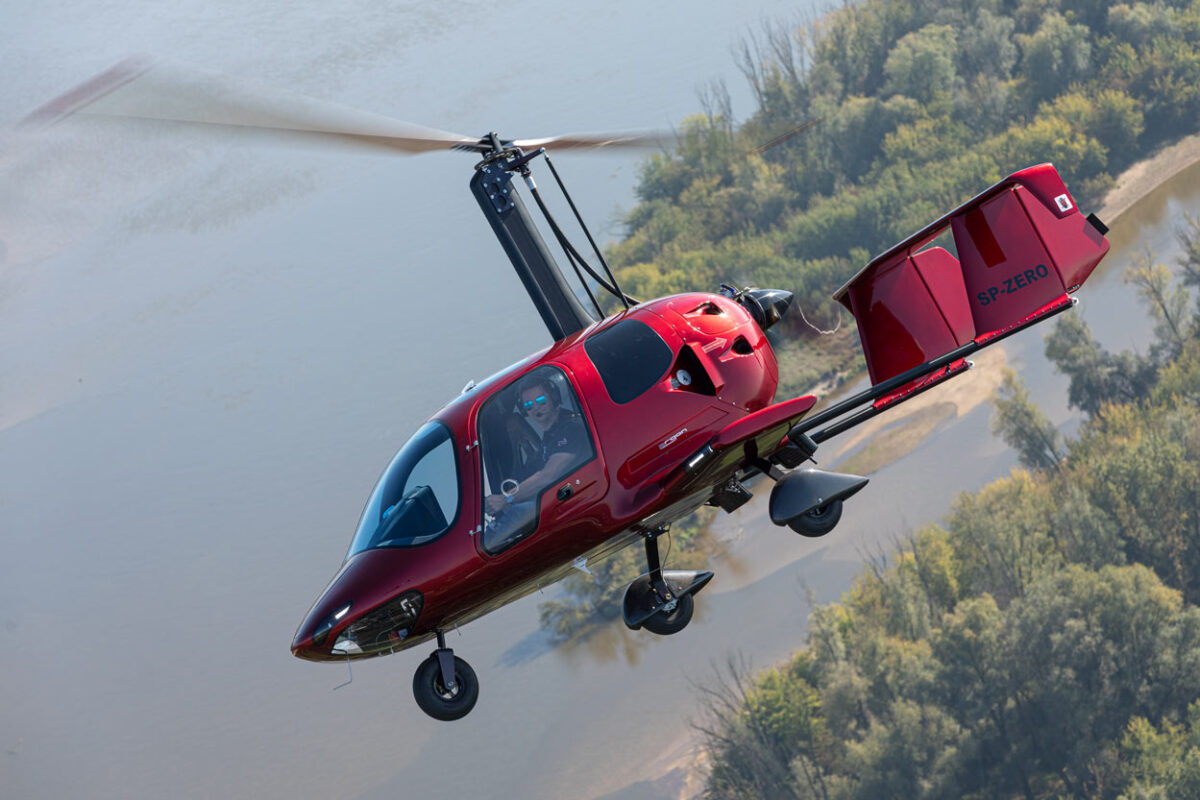
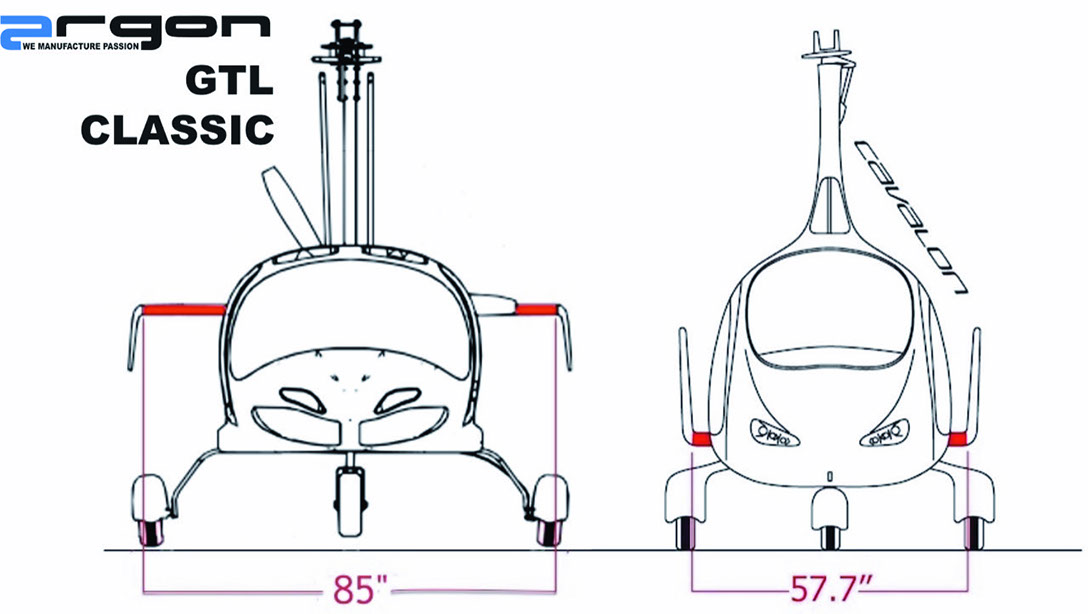
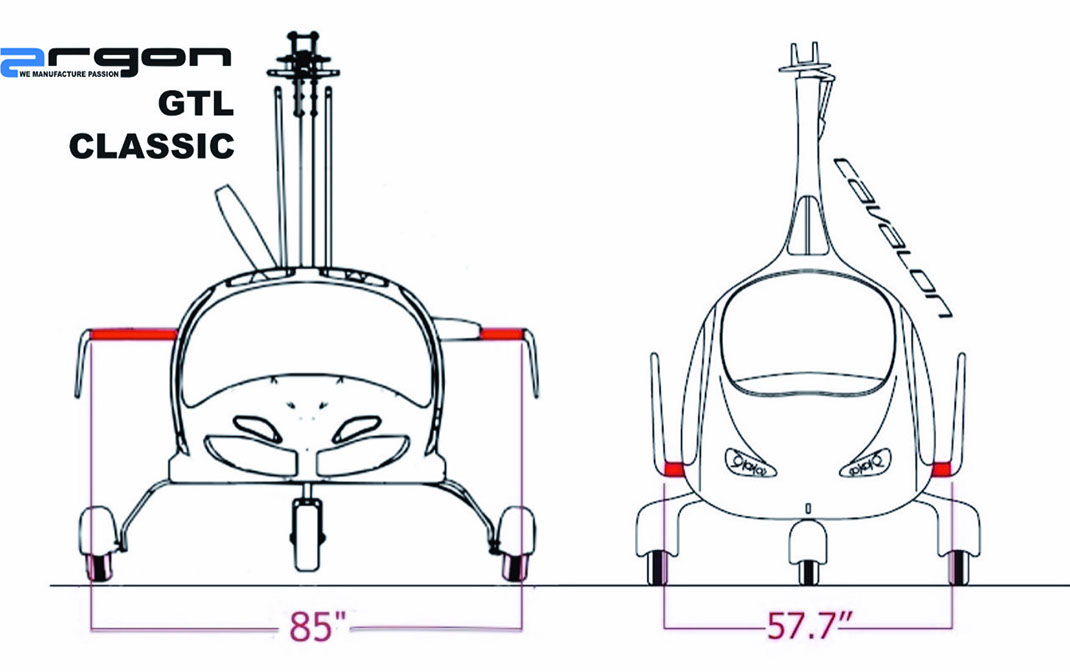
The Argon’s undercarriage is very wide, over 2.2 m, a distance unprecedented in other gyroplanes. This is very important, because it provides a high degree of stability during taxiing, takeoff and landing, much better than narrower gyroplanes. In addition, the shape of the landing struts is slightly angled, to absorb energy in the event of a hard landing and reduce stress transmitted to the cabin and crew. The very wide distance of the main landing gear wheels also helps to lower the center of gravity of the entire aircraft.


Comparison
with other aircrafts
1. Much more cabin space
The ARGON 915 Classic, our standard model, has a cabin that is larger than the competition. ARGON GTL model has 25 more cubic feet than the ARGON CLASSIC.
When you want to go places and do things, you need room for luggage, or camping gear, or cargo, or scanning equipment, or photo equipment.
The ARGON models are designed to be more functional, more useful, and more capable than the two-place gyrocopter competition that squeezes two-three passengers into a cabin, and not much more.
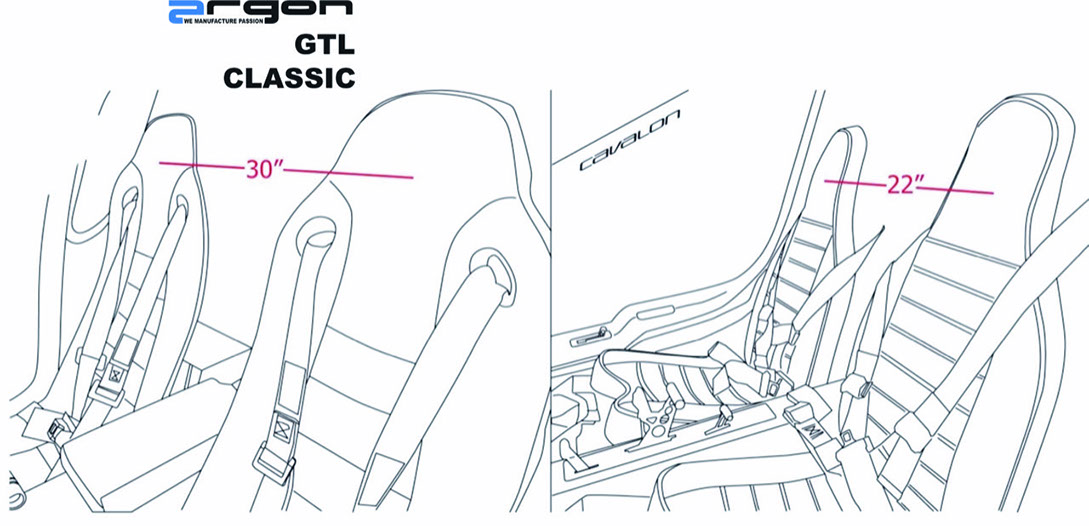
2. More shoulder room
A wider cabin, with more room between the seats is a major comfort advantage of ARGON gyrocopters.
There is also a nice padded armrest between the seats.
An “hidden” advantage of this extra room between the seats is that the center instrument tunnel is so much wider. That makes it so much easier to access all of the control cables and sensor wires. An additional advantage in terms of maintenance and assistance.
3. Wider wheelbase
With a long rotor spinning overhead, there is a tall force to deal with when taxiing for take-off and landing.
The much wider wheel base of our aircraft give you much greater stability especially when taking off and landing on grass or rough fields.
You can taxi on uneven ground, and make turns without being so careful of your ground speed.
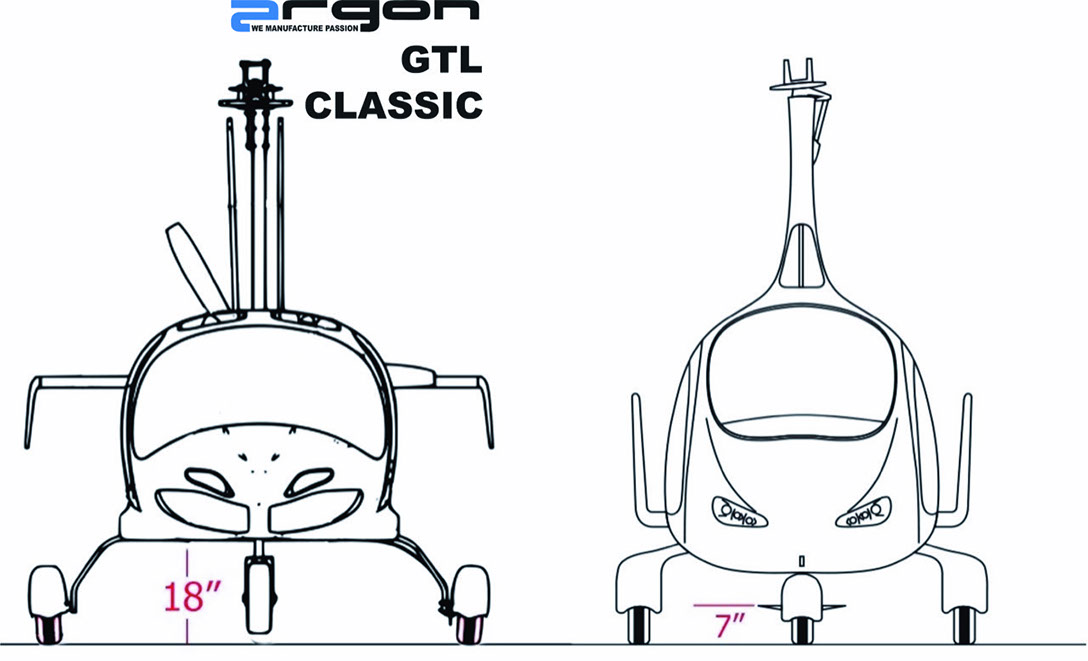
4. More ground clearance
Grass landings, uneven and rough fields are no problem for our ARGON gyrocopters. We have more than double the clearance of the competition, because of our taller landing gear, and also because of our dual tail booms which keep well clear of the ground. Note that the competition, which uses a single tail boom that curves down under their propeller has almost no ground clearance.
That tail boom goes much lower to the ground than the cabin, and will simply drag if a field is not pretty even and smooth.
5. Dual tail booms
When the whole horizontal stabilizer and tail rudders are mounted on a single bent pipe, like our competition does, there is definitely give and vibration. A camera was mounted on the single tail boom of other gyroplanes and the vibrations were recorded. Two straight tail booms are much stronger, and nearly vibration free. ARGON aircrafts have rock-solid stabilizers and even have dual rudders for more authoritative control, enabled by the use of dual tail booms.

6. Wider horizontal stabilizer
The weakness of early gyrocopters was a problem of “power push over”; engine thrust tipping the aircraft over and unloading the rotor, or leading to pilot induced oscillation (porpoising) as the pilot pulled the rotor back to compensate.
Raising the cabin up, relative to the engine, which some gyro makers have done, so that it receives center-line thrust is a solution that makes for a tall gangly aircraft. So, the better answer is to add a much larger horizontal stabilizer to solve the push-over issue.
ARGON aircrafts have a much wider stabilizer, for maximum stability. Note that the height of this stabilizer is directly aligned with the centerline of the propeller’s thrust, to maximize its effectiveness. t is the best solution on the market.
7. Much greater visibility
The joy and the utility of a gyrocopter manifests itself in being able to see your surroundings. ARGON gyrocopters maximize visibility with a much larger front windshield which wraps down at the sides, and with windows in the front floor, windows in the roof, extended visibility downward in the doors, and even windows behind the doors.
The ability see the runway directly below, through the floor windows, has helped many new pilots judge their landings much better, and master the art more quickly.
8. Engine compartment
This is a trade-off advantage that we have come to greatly appreciate. The back of the ARGON is partially open and at first glance does not look as aerodynamic as some gyroplanes that are completely closed. But this is not the case, in fact the open area eliminates the heat accumulation problems that other gyroplanes have with the engine compartment completely closed. And their marvel of German engineering, that tucks the engine, turbo, radiators and oil coolers, etc. into the tiny cone of a compartment, turns out to be a nightmare when we are trying to reach components to inspect or service them. With ARGON design, we can see at a glance, the fuel filters and fuel flow. It is amazing how much easier it is to adjust and service the engine because there is so much extra space.
ARGON ENGINES
ARGON GTL and CLASSIC engines
The highest indicator of the safety of our Gyro is the factory, mass-produced, certified aircraft engines of the engine manufacturer for over 100 years – ROTAX.